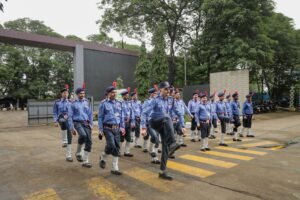
The Delhi High Court has recently addressed a public interest litigation concerning alleged gender disparity in the recruitment process for officers in the Territorial Army (TA). This case, titled Kush Kalra v Union of India & Ors, was brought to the court’s attention by petitioner Kush Kalra, who argues that the current recruitment policy unjustly favors male candidates over female candidates.
Government Notice Issued
On Wednesday, the court issued a notice to the Central government, seeking a response to Kalra’s plea. The Division Bench, consisting of Chief Justice Devendra Kumar Upadhyaya and Justice Tejas Karia, has mandated the government to file its reply to the allegations of gender discrimination in the TA recruitment process.
Allegations of Disparity
The petitioner, Kush Kalra, contends that since 2022, the recruitment process has consistently allocated a disproportionate number of vacancies to male candidates, while significantly restricting the opportunities available to female candidates. Specifically, recruitment drives in 2022, 2023, and 2025 each offered only one position for women, compared to 12, 18, and 11 positions for men, respectively.
Constitutional Violations Cited
Kalra’s petition asserts that such gender-biased allocation of vacancies contravenes Articles 14, 15, and 16 of the Constitution of India, which guarantee equality before the law and prohibit discrimination. He argues that this policy effectively nullifies the progressive 2018 judgment by the High Court, which affirmed the inclusion of women in the Territorial Army.
Legal Precedent Referenced
The petitioner references the High Court’s 2018 ruling in Kush Kalra v Union of India, which interpreted Section 6 of the Territorial Army Act, 1948 as inclusive of both genders by recognizing the term “any person” to encompass women. Despite this judicial directive, Kalra claims that the Territorial Army continues to adhere to a discriminatory practice by maintaining separate and unequal vacancy allocations for men and women.

This ongoing case highlights critical issues of gender justice and equality within the Indian armed forces, drawing attention to the need for reform in recruitment policies to ensure fair and equal opportunities for all candidates, irrespective of gender.