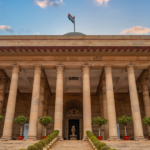
High Court Provides Relief to Journalists Accused of Extortion
In a significant legal development, the Madhya Pradesh High Court has granted anticipatory bail to Vinay Arora, a journalist from Tehelka, who was implicated in extortion charges linked to a sting operation that purportedly unveiled unlawful prenatal sex determination and female foeticide activities in Dewas. The case, Vinay Arora v. State of Madhya Pradesh, has attracted considerable attention due to its implications on investigative journalism and legal boundaries.
Background of the Case
The sting operation, conducted by Tehelka journalists, aimed to bring to light violations of the Pre-Conception and Pre-Natal Diagnostic Techniques Act, 1994 (PCPNDT Act) and the Medical Termination of Pregnancy Act, 1971 (MTP Act). The operation was reportedly shared with senior government officials on April 6, 2026, prior to the filing of the First Information Report (FIR) alleging extortion on April 7, 2026.
Legal Proceedings and Court Orders
Presided over by Justice Pavan Kumar Dwivedi, the High Court noted that the evidence from the sting operation had been communicated to authorities before the extortion charges were filed. This observation played a crucial role in the decision to grant anticipatory bail to Vinay Arora. Similarly, a few days earlier, on June 25, journalist Rajni, also involved in the sting operation, was granted bail after being arrested on April 13.
The journalists were accused under Sections 308(5) and 308(6) (extortion), Section 61(2) (criminal conspiracy), and Section 3(5) (common intention) of the Bharatiya Nyaya Sanhita (BNS). The FIR alleged that Arora, Rajni, and others attempted to extort money from the complainant through the sting recordings.
Defense and Prosecution Stands
Advocate Aman Malviya, representing the journalists, argued that the extortion charges were retaliatory, intended to counteract the exposure of illegal activities. He emphasized that the sting operation footage was sent to authorities well before the FIR was lodged, negating the possibility of extortion.

Conversely, the State, represented by Government Advocates Surendra Singh Alawa and Hemant Sharma, contended that the journalists aimed to blackmail the complainant by capturing the videos.
Outcome and Conditions of Bail
Without commenting on the case’s merits, the High Court extended relief to both journalists through separate orders. On July 2, the Court directed that Vinay Arora be released on anticipatory bail upon furnishing a personal bond of ₹50,000 and a solvent surety upon arrest. Earlier, by its June 25 order, the Court granted bail to Rajni, with conditions including a personal bond of ₹1 lakh and a solvent surety, alongside regular attendance at trial hearings.
The case underscores the delicate balance between the freedom of the press in conducting investigative journalism and the legal frameworks governing such activities.