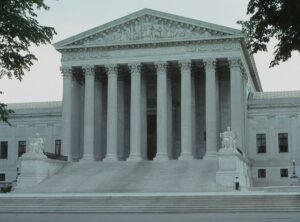
The Supreme Court of India has raised important questions regarding the constitutional validity of a recent amendment to the Prevention of Insults to National Honour Act. The amendment, passed in 2026, criminalizes actions like intentionally preventing the singing of ‘Vande Mataram’ or disrupting assemblies engaged in its rendition, with penalties that can include up to three years of imprisonment. This issue was brought before the Court by Carnatic vocalist TM Krishna, who challenged the amendment, arguing that it compels citizens to sing all six stanzas of the song, which include religious references.
The Court’s Observations
The bench, comprising Chief Justice of India Surya Kant, Justice Joymalya Bagchi, and Justice V Mohana, has asked the Union government to respond to Krishna’s petition within two weeks. During the hearing, Justice Bagchi referenced the Supreme Court’s previous ruling in the Bijoe Emmanuel case, which protects individuals who, due to their conscientious beliefs, choose not to sing the national anthem. Justice Bagchi highlighted that this precedent should also apply to those who opt not to sing the entire Vande Mataram, suggesting that such individuals should not face criminal charges.
The Petitioner’s Argument
Krishna’s petition challenges Section 3 of the Prevention of Insults to National Honour Act, 1971, as amended in 2026. He argues that the amendment goes beyond regulating protocol and compels participation in singing stanzas that invoke Hindu deities, thus infringing on secular principles. The plea underscores that these measures violate fundamental rights under Articles 14, 15(1), 19(1)(a), 21, and 25(1) of the Indian Constitution.
Legal Precedents and Concerns
The plea relies heavily on the 1986 Supreme Court judgment in Bijoe Emmanuel v. State of Kerala, which protected children who respectfully stood during the National Anthem but did not sing it due to their religious beliefs. Krishna’s counsel, Senior Advocate S Muralidhar, argued that the amendment transforms a historically contested symbol into a mandated orthodoxy, subject to penal sanctions, which is fundamentally different from a protocol.
Government’s Position
Solicitor General Tushar Mehta, representing the government, requested that the court avoid issuing a formal notice, suggesting that it might sensationalize the matter. He argued that the amendment was a product of the constitutional legislative process, reflecting public opinion, and criticized the petitioner for attempting to act as a moral authority.

Conclusion and Next Steps
Krishna seeks to have the amended Section 3 struck down and to establish that only the first two stanzas of Vande Mataram should be considered the National Song. The Supreme Court’s decision in this case will have significant implications for how national symbols are respected and the balance between national honor and individual rights.
The Court’s upcoming decision will be closely watched, as it will likely address the broader issue of how national pride is balanced with constitutional freedoms.