Supreme Court Invalidates 28-Year-Old Decree for Lack of Client’s Express Authority
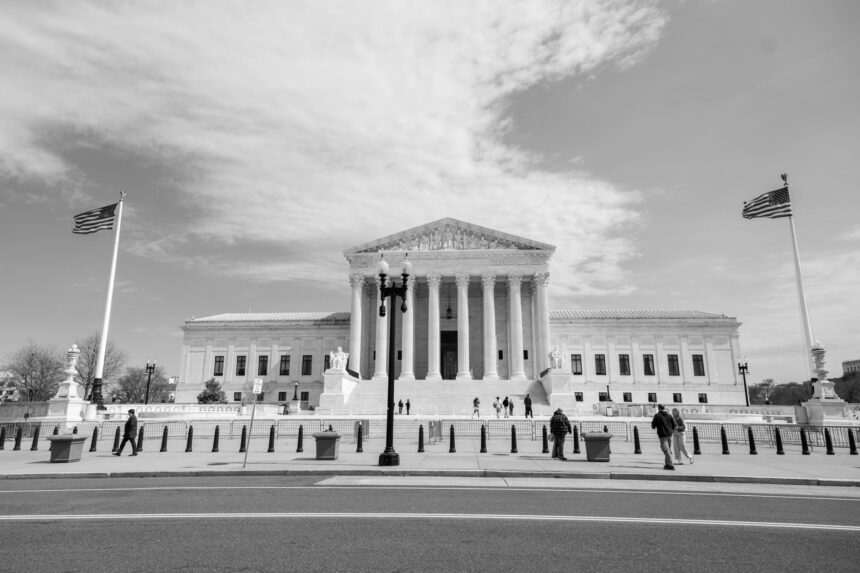
In a significant ruling, the Supreme Court of India has determined that a compromise decree under Order XXIII Rule 3 of the Code of Civil Procedure (CPC) is invalid if a lawyer enters into it without the client’s explicit approval. The case in question, Krishna Kumar Ojha & ors v. Jitendra Chaudhary & Ors., was reviewed by a bench comprising Justices Sanjay Karol and N Kotiswar Singh.
The court clarified that a compromise decree can only be legitimate if it is signed by the parties themselves or by a duly authorized representative. A lawyer cannot relinquish a client’s substantive legal rights based solely on implied authority. “A counsel should not act on implied authority in the absence of exigent circumstances,” the Court remarked, emphasizing the necessity for courts to apply judicial scrutiny to ensure the legitimacy and voluntariness of a compromise before endorsing a decree.
This observation came in the course of upholding the Patna High Court’s decision to overturn a compromise decree that had been in place for 28 years. The lawyer who signed the compromise on behalf of one of the parties was found to have acted without express authorization from the client.
Background of the Case
The dispute originated from a partition suit filed in 1989 concerning ancestral property. During the proceedings, a compromise petition was filed and accepted by the trial court in 1994, with a final decree following in 1997. Decades later, the legal heirs of one of the defendants contested the compromise, claiming it had never been sanctioned by their predecessor. They argued that their predecessor had neither signed the compromise petition nor authorized the lawyer to agree on his behalf.
The trial court, agreeing with these arguments, annulled the compromise decree, a decision that was later upheld by the Patna High Court. The matter was then brought before the Supreme Court for final adjudication.
Supreme Court’s Findings
Upon reviewing the case, the Supreme Court noted that the compromise petition merely indicated “no objection” from the defendant’s lawyer, without any evidence of express authorization from the client. Citing prior judgments, the Court reiterated that advocates, in the absence of express authority or extraordinary circumstances, cannot compromise their clients’ substantive legal rights.
The Court pointed out that the requirement for a compromise to be signed by the parties was mandated by the 1976 amendment to the CPC to safeguard against false claims of settlements. Since there was no evidence of voluntary authorization by the defendant, the requirements of Order XXIII Rule 3 were not met, thus invalidating the decree.
Consideration of Limitation Period
Addressing the issue of delay, the appellants contended that the challenge was filed nearly 28 years post-decree, suggesting it was time-barred. The Supreme Court dismissed this argument, stating that while the delay was considerable, dismissing the challenge solely on grounds of limitation would perpetuate an unlawful decree. “The law of limitation, while undoubtedly an important facet of the legal system, cannot be used as a means to defeat substantive rights,” the Court asserted.
More Read
The Court clarified that not all delayed challenges would be entertained; each case would be assessed on its unique facts. In this instance, the compromise impacted significant property rights, and its validity was seriously disputed. Essential facts—such as the defendant’s authorization of the lawyer, awareness of the proceedings, and the authenticity of the compromise—were all under serious contention and warranted a full trial.
Consequently, the Supreme Court dismissed the appeal, upheld the annulment of the compromise decree, and directed the partition suit to proceed to trial, despite its protracted history of nearly four decades.
The petitioners were represented by advocate Anisha Upadhyay, while the respondents were represented by advocates Arun Maitri, Rabin Majumder, Radhika Chandrasekhar, Mousumi Roy, and Shivam Majhi.