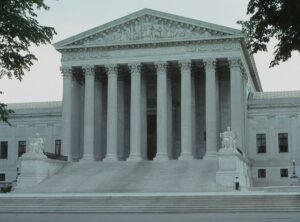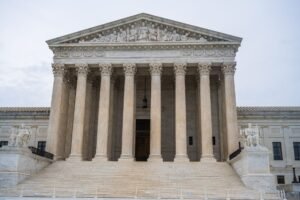
The Supreme Court recently delved into the extent of the Bar Council of India’s (BCI) authority in controlling law colleges, despite its recognized role in promoting and regulating legal education. During the proceedings of Girish Mittal v. Bar Council of India and others, Chief Justice of India (CJI) Surya Kant remarked that while the BCI can set educational standards and promote legal education, it cannot exert control over law colleges. He questioned the BCI’s expertise in education management, emphasizing that such matters should be handled by experts.
BCI’s Role Under Scrutiny
The Bench, comprising CJI Surya Kant, Justice Joymalya Bagchi, and Justice V Mohana, was addressing concerns regarding the BCI Trust PEARL-First’s use of funds. This trust, established in 2020, succeeded the BCI trust operational since 1974. According to petitioner Girish Mittal, the creation of two law colleges in Goa and Andhra Pradesh involved questionable financial arrangements with state governments, leading to potential conflicts of interest.
Advocate Prashant Bhushan, representing Mittal, highlighted concerns over the BCI’s perceived conflict of interest, as the BCI, a regulatory body, appeared to be managing the colleges it oversees. He argued that BCI’s involvement in these colleges contravenes established legal principles, referencing prior Supreme Court rulings, including the BCCI case, which emphasized the separation of regulatory and operational roles.
Judicial Examination of BCI’s Powers
CJI Surya Kant noted the need to scrutinize the BCI’s regulatory scope over law universities, suggesting the potential referral of the issue to a larger bench. This inquiry includes interpreting Section 7(1)(h) of the Advocates Act, 1961, which mandates the BCI to promote and set standards for legal education.
Senior Advocate Atmaram Nadkarni defended the BCI’s powers, equating its role to that of the Medical Council of India in regulating medical education. He referenced a Constitution Bench judgment that supports regulatory roles in professional education sectors.

Senior Advocate Shobha Gupta also voiced concerns regarding the substantial donations received by the BCI PEARL-First trust, implying financial incentives tied to college approvals. The Court acknowledged these concerns and issued a notice on Mittal’s petition, instructing service of the notice upon BCI standing counsel and the office of SG Mehta.
As the Supreme Court continues to consider these matters, the fundamental question remains: to what extent can the BCI exercise its regulatory influence over legal education institutions while maintaining its impartiality as a governing body?