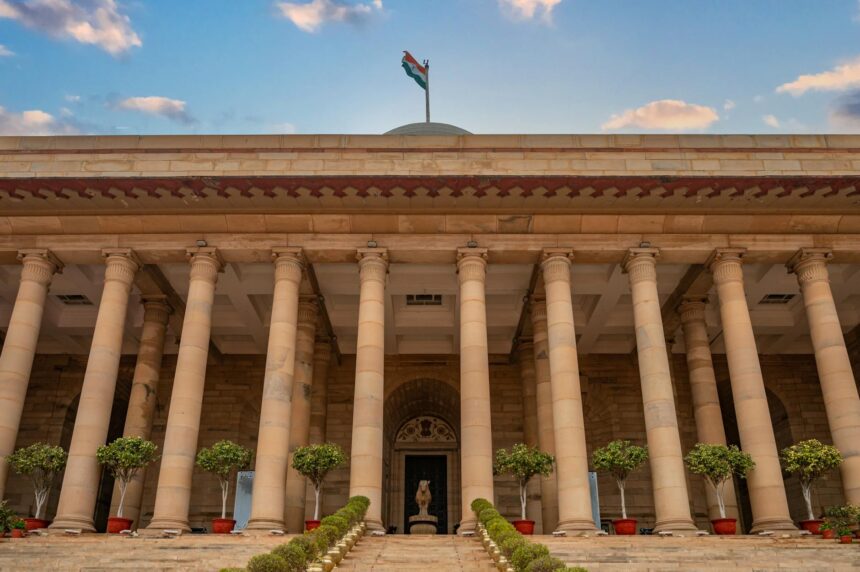
The Supreme Court of India has issued notices to the Union Government, the Central Board of Secondary Education (CBSE), and the National Council of Educational Research and Training (NCERT), requesting their responses to a petition challenging a CBSE directive. This directive mandates students from classes 6 to 9 to study three languages, including two regional languages, as part of their curriculum. The case, titled Yashica Bhandari Jain & Ors. v Union of India & Ors., was presented before a bench comprising Chief Justice of India (CJI) Surya Kant and Justice Joymalya Bagchi.
Logistical Concerns and Educational Policy
During the hearing, the bench recognized the potential logistical issues inherent in implementing this policy and called for comprehensive responses from the involved parties. CJI Surya Kant remarked, “Let us have a comprehensive reply. We can hear on June 15. There will be logistical issues.” The policy in question reflects changes from the National Education Policy 2020 and the National Curriculum Framework for School Education 2023, requiring students from July 2026 to pursue three languages, with two being Indian languages.
Arguments Against the Policy
The petitioners, comprising parents and educators from various regions, argue that this sudden policy shift imposes an undue academic burden mid-session. They contend that the new requirements disrupt preparations for the Class 10 board exams and highlight inadequate infrastructure, such as a lack of trained teachers and textbooks. Additionally, concerns about unequal regional impacts and unclear evaluation methods for the additional language were raised.
Senior Advocate Mukul Rohatgi, representing the petitioners, stated that the policy disrupts existing language combinations. He provided examples where students studying subjects like Tamil, English, and French would have to add another Indian language, which is also necessary for final certification.
Constitutional and Educational Considerations
Senior Advocate Kapil Sibal emphasized constitutional issues, stating, “There are Constitutional issues of federalism and of choices… language is a matter of choice.” However, Justice Bagchi clarified that the court’s immediate focus would be on logistical rather than constitutional issues, noting, “We are not on the federal issue. This is increasing the number of regional languages. There are issues of teachers, books etc.”
More Read

Additional Solicitor General (ASG) Aishwarya Bhati, appearing for the CBSE, expressed readiness to respond to the court’s inquiries, stating, “I am ready today. There is no urgency for June 15. Only classes will start. Everything will be subject to orders of this court.” Justice Bagchi suggested that a status report on logistical readiness should be filed in response to these concerns.
Next Steps and Hearing Dates
The court has requested CBSE’s detailed response and indicated that the matter will be revisited on July 15 or 16, following the Supreme Court’s summer break. The case underscores the importance of balancing educational reforms with practical implementation challenges. CJI Kant also noted, “When you learn more languages, it strengthens federal structure and another thing is also there,” emphasizing the broader benefits of multilingual education.
This legal development will be closely monitored, as it could have significant ramifications for educational policy and student welfare across India.