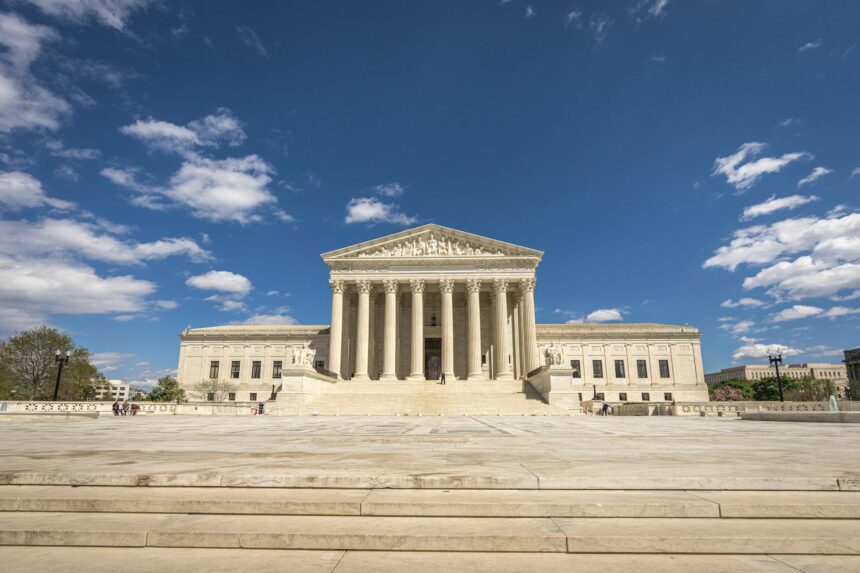
The Supreme Court of India has issued a notice to the National Testing Agency (NTA) concerning a series of petitions related to the alleged leak of the NEET UG 2026 question paper. NEET UG is the preeminent entrance examination for medical aspirants in both government and private colleges across India. The bench, comprising Justices PS Narasimha and Alok Aradhe, expressed disappointment over the recurrence of such allegations, reminiscent of similar incidents in 2024.
“It’s unfortunate that no lessons appear to have been learned,” remarked the bench, referring to previous directives and recommendations made by a committee formed to address the issue. The court has sought a detailed response from the NTA regarding the current complaints.
“We will issue notices on the related matters. A copy of the writ petitions must be served to the learned Solicitor General and all other respondents,” the court directed, emphasizing the need for the NTA to file an affidavit regarding the status of the monitoring committee established on November 14. Additionally, K Radhakrishnan, the committee chairman, has been instructed to submit an affidavit detailing the measures taken to comply with the high-powered committee’s recommendations. The case will be heard again on Friday, May 29.
The re-examination for NEET UG 2026 is scheduled for June 21, and while the court acknowledged the new date, it stated, “We are not so much on the re-examination.” The petitions were initiated following the cancellation of the NEET UG 2026 exam on May 3 due to allegations of a paper leak and an ongoing investigation by the Central Bureau of Investigation (CBI).
One significant petition, filed by the Federation of All India Medical Association (FAIMA), calls for the restructuring or replacement of the NTA, seeking a re-conduct of the NEET UG 2026 under a judicially appointed committee led by a retired Supreme Court judge. The petition advocates for reforms such as “digital locking” of question papers, transitioning to a Computer-Based Test (CBT) model, and publishing center-wise results to identify discrepancies.
More Read

Another petition by the United Doctors Front challenges the legal framework of the NTA, suggesting its dissolution due to its status as a society registered under the Societies Registration Act of 1860, which, according to the petition, lacks direct parliamentary accountability. The plea urges the creation of a statutory national testing body through legislative action passed by Parliament.
The recurring controversies surrounding paper leaks are claimed to infringe upon Articles 14 and 21 of the Indian Constitution, affecting merit-based selection and the future of over 22 lakh candidates. The plea also references a “guess paper” racket reportedly uncovered by the Rajasthan Police Special Operations Group, highlighting significant overlaps between circulated documents and the actual NEET UG 2026 paper.
Despite recommendations post-NEET UG 2024 by the K Radhakrishnan Committee, the plea asserts that substantial reforms have not been implemented. It calls for a transition to CBT or hybrid examination models, digital locking of question papers, and the establishment of a court-monitored committee to oversee future national examinations.
More Read

Additionally, a separate petition has been filed by RJD MP Sudhakar Singh, social activist Anubhav Garg, IMA national spokesperson Dhruv Chauhan, and political leader Harisharan Devgan. Their plea demands the immediate transition of NEET UG to a CBT format, including the upcoming re-examination. They also seek a time-bound plan for fully adopting CBT, infrastructure development, cybersecurity measures, and accessibility for candidates. Moreover, they advocate for the replacement of the NTA with a new independent examination authority endowed with statutory accountability, judicial oversight, and technological safeguards. Further recommendations include encrypted digital paper transmission systems, biometric verification, and AI-based surveillance in national examinations.