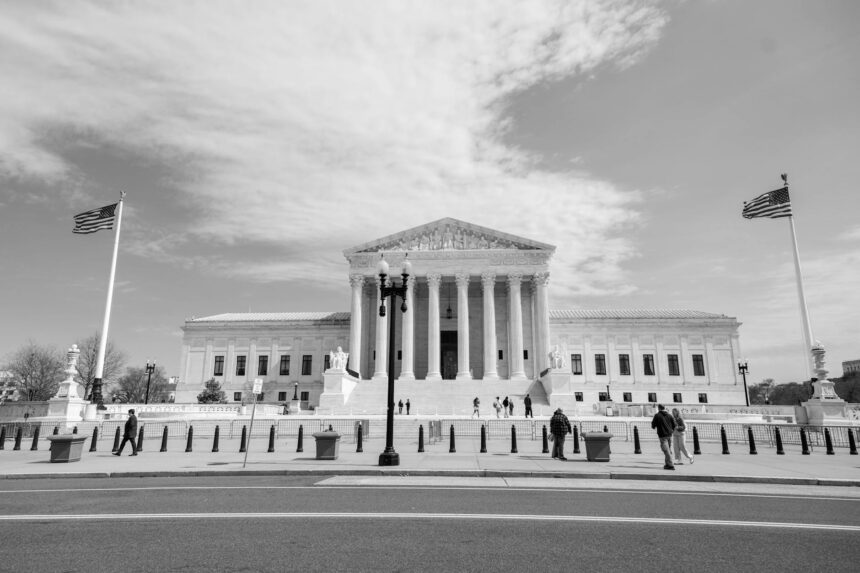
Supreme Court Dismisses Appeal on Adani Coal Mining Project
The Supreme Court of India has decided not to entertain an appeal contesting the National Green Tribunal’s (NGT) decision regarding environmental clearances given to a coal mining project associated with the Adani Group in Madhya Pradesh’s Singrauli forest. This area is reportedly part of an elephant corridor, as cited in the case Ajay Dubey vs. Union of India & Ors.
A bench comprising Justices PS Narasimha and Alok Aradhe expressed their reluctance to delve into the merits of the environmental clearances, allowing the petitioner the option to pursue alternative legal remedies. Consequently, the petitioner, environmental activist Ajay Dubey, opted to withdraw the appeal. The NGT had previously dismissed Dubey’s plea on the grounds of being time-barred, prompting the subsequent appeal to the Supreme Court.
The Case Background and Proceedings
The legal challenge initiated by Ajay Dubey targeted the forest clearances granted to Mahan Energen Limited, a subsidiary of the Adani Group. The project spans approximately 1,400 hectares in the Singrauli region. Dubey argued that the mining area forms part of a crucial elephant corridor extending through Jharkhand, Chhattisgarh, and Madhya Pradesh, which involves deforestation impacting nearly 600,000 trees.
Dubey also contended that the project proceeded without necessary approvals from the National Board for Wildlife and that it fell within “no-go” forest zones, as previously identified by the Ministry of Environment, Forest, and Climate Change. The NGT dismissed this challenge on April 22, citing a limitation period under Section 16 of the NGT Act. In response, Dubey approached the Supreme Court, filing a writ petition under Article 32 and a separate civil appeal challenging the NGT’s limitation ruling.
Supreme Court’s Standpoint
The writ petition was dismissed by a bench led by Chief Justice of India (CJI) Surya Kant and Justice Joymalya Bagchi on May 11. The civil appeal was directed to a bench comprising Justice Narasimha. In the appeal, Dubey argued that mere online posting of the forest clearances on the Ministry’s website did not constitute “communication” under Section 16 of the NGT Act.
More Read

Dubey emphasized that the clearances were not properly publicized via local authorities or media, with affected parties only becoming aware following reports of significant deforestation and local protests in December 2025. Dubey argued that the limitation period should commence only when the order is effectively communicated to those impacted, rather than upon a limited publication online.
During the appeal hearing, advocate Siddharth R Gupta, representing Dubey, underscored the environmental implications, urging the Supreme Court to exercise its powers under Article 142 of the Constitution to independently scrutinize the forest clearances. Despite these arguments, the bench chose not to examine the clearances’ legality, thereby dismissing the civil appeal.