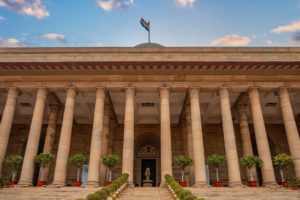
The Supreme Court of India has recently allowed states with fewer than 1,000 pending consumer disputes to consider closing certain District Consumer Forums. This measure aims to streamline consumer dispute resolution by transferring cases to existing judicial officers, provided there is approval from the respective jurisdictional High Courts. This decision was delivered by a Bench comprising Chief Justice of India (CJI) Surya Kant, Justice Joymalya Bagchi, and Justice V Mohana, as part of ongoing efforts to enhance the functioning of Consumer Commissions across India.
In a pivotal order dated July 22, the Supreme Court stated, “All those States where the total pendency is less than 1,000 cases shall be at liberty to abolish some of the District Forums and entrust the cases to the serving judicial officers, with the prior concurrence of the jurisdictional High Court(s).” This order is part of the Court’s broader oversight regarding the constitution and operation of State and District Consumer Commissions, focusing on appointments, service conditions, and infrastructure.
The Supreme Court’s intervention stems from a previous order on February 11, where it recognized the financial burden on smaller States and Union Territories of maintaining separate Consumer Commissions despite minimal case pendency. States like Arunachal Pradesh, Sikkim, Tripura, Mizoram, Manipur, Goa, and Union Territories such as Lakshadweep and the Andaman and Nicobar Islands were highlighted, some having only a handful of pending disputes.
To ensure consumers continue to have access to justice, the Court directed that pending cases from these regions be managed by the Registrars General of the jurisdictional High Courts. Subsequently, a single-judge bench, supported by existing technical members, would serve as a deemed State Commission to adjudicate these disputes.
Furthermore, the Court has permitted states and territories with fewer than 1,000 pending complaints and appeals to propose alternative methods for resolving consumer disputes efficiently. The recent directive allows states to abolish certain District Consumer Forums, with their caseloads transferred to judicial officers approved by the High Court.
More Read

Additionally, the Court has mandated full compliance with its February order, requiring all states to update the Bench on steps taken to maintain the operational integrity of State Consumer Commissions.
The Supreme Court also reviewed compliance regarding the order ensuring no reduction in pay for officials appointed to Consumer Commissions. It noted that only Andhra Pradesh and Gujarat had updated their regulations accordingly. Other states either failed to comply or requested modifications to the order, prompting the Court to grant two weeks for affected parties to respond to these modification requests. States that neither complied nor sought modifications have been directed to act within this timeframe and submit compliance reports.
The Court expressed concern over some states not providing necessary information to the court-appointed amicus curiae regarding the service conditions of Consumer Commission members. It instructed these states to supply the required details and submit status reports before the next hearing, cautioning that no additional extensions will be granted.
More Read

The case is scheduled for a subsequent hearing on August 13. Senior Advocate Kiran Suri represented four retired members of the Uttar Pradesh District Consumer Forum, while Senior Advocate Gopal Sankaranarayanan, assisted by advocate Aditya Narain, served as amicus curiae.