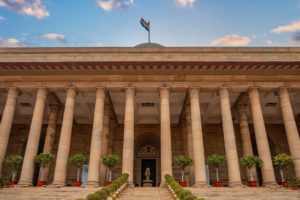
The Court of the Chief Commissioner for Persons with Disabilities (CCPD) has issued a directive to Miranda House, a constituent college of the University of Delhi, to reinstate a transgender student with a certified intellectual disability. This student had achieved an All India Rank of 10 in the persons with benchmark disability (PwBD) category of the Common Law Admission Test (CLAT) 2025. The directive comes after the student was compelled to switch to distance learning due to denial of hostel accommodation.
Commissioner S Govindaraj criticized the college’s actions as constituting hostile discrimination. “The principle of reasonable accommodation is a statutory, constitutional, and human rights obligation that should have been proactively extended to a meritorious person with a benchmark disability. A clear case of hostile discrimination is visible by the Respondent’s failure to shortlist the Complainant’s name for the initial hostel interview list despite her outstanding merit and high score,” reads the order dated June 15.
The complaint was filed by Anushka Priyadarshini, a student of the B.A.LL.B. programme at Miranda House. Anushka, who holds a unique disability ID (UDID) certificate reflecting a 48% intellectual disability, identifies as transgender and intersex with a disorder of sex development (DSD) condition. Her overall CLAT 2025 rank was 2,907, with a notable AIR 10 in the PwBD category.
After her admission, Anushka applied for hostel accommodation, arguing that as an outstation student from an economically disadvantaged background, private housing in Delhi was financially untenable. Despite this, her name was omitted from the hostel interview shortlist even though 2 reserved PwBD and 5 discretionary seats were vacant. As a result, she enrolled in distance learning through Indira Gandhi National Open University (IGNOU). Miranda House subsequently used this enrollment to declare Anushka an ex-student and deny her hostel application.
Anushka then lodged two complaints with the CCPD against the college administration. She also approached the National Commission for Women (NCW), which forwarded her representation to the Ministry of Social Justice and Empowerment. The Ministry requested an inquiry and report from the Chief Secretary of NCT Delhi by June 4.
More Read

Before the CCPD formally notified its order, Priyadarshini sought relief from the Delhi High Court. On May 18, Justice Purushaindra Kumar Kaurav instructed the CCPD to address her grievance within six weeks, resulting in the June 15 order.
The CCPD found that the college’s policy of prioritizing disabilities for hostel accommodations was not statutorily supported and contravened Section 32 of the Rights of Persons with Disabilities (RPwD) Act, 2016, which requires a minimum 5% reservation for individuals with benchmark disabilities. The Commission noted that Priyadarshini’s CLAT scorecard, already part of the admission records, should have been utilized via internal database mapping rather than penalizing her on procedural grounds.
Referring to the Supreme Court ruling in Saurav Yadav v State of Uttar Pradesh, the Commissioner underscored that her overall rank of 2,907 entitled her to open-category consideration, rendering the filled-quota argument void.
More Read

Regarding gender identity, the Commission asserted that educational institutions are not authorized to challenge a student’s self-identified gender, and any credential verifications should be managed through the University’s Equal Opportunity Cell.
The Commissioner issued 13 recommendations, including the immediate re-admission of Priyadarshini to her BA.LL.B. programme without academic penalties, free study provisions, and a hostel fee concession following Delhi University’s Policy for Transgender Students. Miranda House has been allotted 30 days to submit an action report, failing which penal actions may be initiated under Sections 89 and 93 of the RPwD Act.