Supreme Court Quashes FIRs Against Protestors
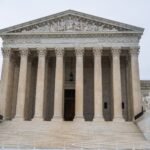
In a notable decision, the Supreme Court of India annulled several first information reports (FIRs) filed by police across multiple states, including Delhi, Bihar, Maharashtra, West Bengal, and Assam. These FIRs were in connection with protests organized by the Cockroach Janta Party (CJP) concerning academic grievances, notably paper leaks.
The bench, comprising Chief Justice of India Surya Kant, Justice Joymalya Bagchi, and Justice V Mohana, exercised their powers under Article 142 of the Indian Constitution. This provision allows the court to deliver complete justice in a case, enabling them to nullify the FIRs after the Central government and the respective state governments sought such action.
Broader Implications and Future Directions
The ruling further extends to prevent the pursuit or investigation of similar FIRs in other states and union territories, effectively closing these cases. The court stated, “Considering the future prospects of the young protesters who participated peacefully to voice their demands, it is appropriate to invoke Article 142 to ensure complete justice.”
Additionally, the Supreme Court ordered that no new FIRs should be filed concerning protests held between July 20 and 25. The court also directed the government to compensate within three months the families of students who tragically took their own lives due to issues connected with the NEET 2026 examination. This compensation policy is to be developed in collaboration with state governments.
Central Government’s Assurance and Legal Proceedings
During the proceedings, Solicitor General Tushar Mehta assured the court that the Central government had committed to not pursuing the FIRs linked to the protests. However, he noted that prosecution would continue against individuals with “serious criminal antecedents” according to the National Crime Records Bureau. The court allowed the Delhi Police to file a single, comprehensive FIR against these individuals, with restrictions limited to allegations of bodily harm and property destruction.

Mehta also indicated the necessity of three months to finalize the compensation policy and urged the court to quash cases from states other than the aforementioned five. Following these assurances, the CJP withdrew its planned protest march scheduled for September 5 in Delhi.
CJP’s Response and Court’s Guidance
Saurav Das, co-convener of the CJP, expressed gratitude for the court’s decision and the government’s assurances, leading to the cancellation of the protest march. Chief Justice Kant acknowledged the CJP’s decision, emphasizing the potential for resolving complex issues through mutual good faith.
The court clarified that its extraordinary use of Article 142 in this context should not be seen as a precedent. Instead, both parties are expected to adhere to the mutual understanding reached during the proceedings. Senior advocates N Hariharan and Vrinda Grover also presented their arguments before the court.