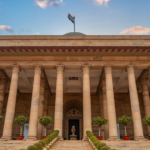
Jammu University Students Conclude Protest After Fee Concessions
After nine days of persistent protests, law students at the University of Jammu have achieved a series of financial concessions concerning the fee structure for the academic year 2026-27. The protests, primarily spearheaded by the Akhil Bharatiya Vidyarthi Parishad (ABVP), came to a halt on June 25 following successful negotiations with university officials.
Among the key agreements reached, the University will provide a one-time financial aid of ₹500 to all students admitted in the 2026-27 academic year. Additionally, students in their third, fifth, seventh, and ninth semesters will continue to pay their fees at the current rates, with no increases. The 2026-27 batch is also granted the flexibility to pay their fees in two installments, easing the financial burden on families.
Further, the University has committed to enhancing scholarships and financial aid for students from economically disadvantaged backgrounds. Importantly, the proposed fee increase will not affect students admitted in the 2027-28 academic year.
Students’ demands included reversing a University Council provision allowing annual fee hikes of up to ten percent, which they argue has been uniformly enforced each year. On this matter, the University has pledged to engage with government bodies to discuss potential changes.
ABVP State Secretary Sannak Shrivast highlighted that the concessions would directly benefit approximately 2,400 newly admitted students, resulting in an estimated collective financial relief of around ₹12 lakh.
More Read

The roots of the protest can be traced back to a fee dispute in 2025 when the Law Department initially set fees for the three-year LL.B. program at approximately ₹17,000. Following student pushback, the fees were reduced, and students were assured of no further hikes. However, at the onset of the 2026-27 session, new entrants to the three-year LL.B. program faced fees of around ₹20,000, while those in the five-year BA-LL.B. program were charged approximately ₹50,000.
Students also raised concerns about specific fee components. For instance, they questioned a Green Cess of ₹130, given that vehicles are banned on campus, and a Digitalization and Networking Fund of ₹260, despite university records still being maintained in handwritten format.