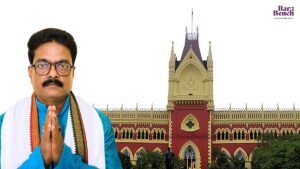
The Jammu & Kashmir and Ladakh High Court recently rendered a decision concerning the appointment of four civil judges, originally made in 2011. This appointment was determined to be illegal due to a clerical error by the State law department and the J&K Public Service Commission (PSC) in the advertisement for recruiting judicial officers. This ruling emerged from the case Tabassum Qadir Parray v. High Court of Jammu and Kashmir and Another.
A Division Bench comprising Justices Sanjeev Kumar and Sanjay Parihar found that although the appointments were illegal, a compassionate approach had allowed the judges to retain their positions. However, the Court noted that this decision adversely affected the rights of other eligible candidates. “We have no hesitation to say that the appointment of the petitioners was not only irregular but illegal and in derogation of the settled legal position. By accommodating the petitioners against the four future vacancies, the right of invisible candidates who had acquired eligibility to seek consideration against these posts was clearly taken away,” the Court stated.
The issue dates back to 2008, when the law department mistakenly referred 35 munsiff positions, including four backlog vacancies for the Scheduled Tribe (ST) category, to the PSC. This was contrary to the High Court’s requisition for 31 posts, including the ST vacancies. The law department incorrectly informed the PSC that the four posts were in addition to those initially referred by the High Court.
Despite the error going unnoticed by both the High Court and State authorities during the selection process, over 1,000 candidates sat for the exams. In September 2010, 35 candidates, including the four in question, were recommended for appointment. The government approved these recommendations in October 2010. However, the High Court only sanctioned the appointment of 31 candidates in April 2011, as only that number of vacancies were available at the time. The four additional candidates were appointed in September 2011 when more vacancies arose.
The controversy resurfaced when the High Court placed the four judges below those appointed earlier in the same seniority list, prompting the judges to argue for equal seniority due to the delay in their appointments not being their fault. The Division Bench, addressing their 2018 petition, noted that these appointments occurred post-government concurrence and that they were accommodated against new vacancies resulting from promotions.

The judges were informed that they had no inherent right to appointment based solely on their selection list placement, especially since they were selected beyond the available vacancies. The High Court had no obligation to accommodate them against future vacancies, though it did so out of compassion, filling four of the 15 new vacancies that arose.
The Court emphasized that utilizing the four vacancies to accommodate these judges was against the rules and the established legal precedent. It further stated that these appointments were “de hors the Rules and, in any case, irregular, if not void ab initio.” As such, these judges could not equate themselves with those appointed under the established process.
The Court concluded by stating that irregular appointments could not take precedence over those following the rules. The government had shown leniency by accepting the High Court’s recommendation, and the judges should be grateful for their appointments despite lacking an indefeasible right.
More Read
The petition was dismissed on grounds of delay and laches, with the Court remarking that the petitioners had accepted their prospective appointments and subsequent promotions. The advocacy representation included Salih Pirzada for the judges, and MI Qadiri, Waseem Gul, Showkat Ali Khan, and Faheem Nisar Shah for the respondents.