In a dramatic turn of events at the Supreme Court on Tuesday, a contentious exchange unfolded between Solicitor General (SG) Tushar Mehta and former Chief Justice of the Orissa High Court, Senior Advocate S Muralidhar. The altercation stemmed from Mehta’s use of the term “Naxalite” during proceedings, which sparked a strong objection from Muralidhar.
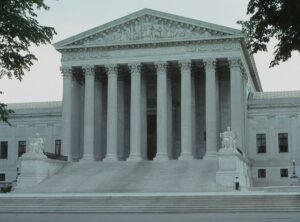
The session was presided over by a Bench comprising Chief Justice of India (CJI) Surya Kant and Justices Joymalya Bagchi and V Mohana. The matter at hand involved a petition filed by renowned Carnatic vocalist TM Krishna, challenging a 2026 amendment to the Prevention of Insults to National Honour Act. The amendment criminalizes the intentional prevention of ‘Vande Mataram’ singing or disruption of related assemblies, imposing a potential penalty of up to three years’ imprisonment.
During the hearing, Muralidhar, representing Krishna, took issue with SG Mehta’s “Naxalite” remark, emphatically requesting its withdrawal. “Withdraw the expression you used just now. This is going live…I strongly object,” Muralidhar asserted. SG Mehta retorted, “I said that is the constitutional way, not what the Naxalite wants. And I am not sorry about it.” Muralidhar reiterated his protest, prompting Senior Advocate Sanjay Hegde to interject with, “To think is not to be a Naxalite.”
Justice Bagchi intervened, emphasizing the constitutional rights afforded to all individuals, including those labeled as terrorists. The case brought forth by Krishna scrutinizes Section 3 of the Prevention of Insults to National Honour Act, 1971, as revised in 2026. The petition also challenges guidelines issued by the Ministry of Home Affairs mandating the singing of all six stanzas of ‘Vande Mataram’ at certain official and cultural occasions.
According to the revised law, preventing or disrupting the singing of the National Anthem or National Song is an offense punishable by imprisonment, fines, or both. Krishna’s petition argues that these directives exceed the scope of protocol regulation, forcing individuals to partake in singing the last four stanzas, which the plea claims reference Hindu deities like Durga, Lakshmi, and Saraswati.

The plea argues, “In consequence and in effect, the Impugned State Action does not merely regulate national protocol or prescribe a uniform code of conduct for public functions. It compels a ceremony of assent to a symbol whose last four stanzas, Stanzas 3 to 6, are expressly devotional, deity-invoking and non-secular.” The challenge is based on Articles 14 (equality), 15(1) (protection against discrimination), 19(1)(a) (freedom of speech and expression), 21 (life and personal liberty), and 25(1) (freedom of conscience and religion).
Krishna’s argument references the Supreme Court’s 1986 ruling in Bijoe Emmanuel v State of Kerala, which upheld the rights of students who refrained from singing the National Anthem due to religious beliefs. The petition contends that the imposition of criminal penalties transforms a protocol into an enforced orthodoxy.
The plea further asserts that the first two stanzas were initially a standalone patriotic song, with the subsequent four added in Bankim Chandra Chattopadhyay’s novel Anandamath. It highlights the distinct religious and musical nature of these later stanzas. The petition also cites the 1937 Congress Working Committee decision to limit national gatherings to the first two stanzas following objections from Muslim members.
More Read
The petition concludes that the 2026 directives, although nominally neutral, unmistakably signal a majoritarian religious alignment, imposing expressive subordination on believing Muslims and other conscientious objectors.